




On the stage of B4i’s final Investor Day, after seven years of activity, our Operating Director Nico Valenti Gatto acknowledged the symbolic significance of the moment: "This is the very final Investor Day with the B4i logo hovering over our heads." It was more than the conclusion of an accelerator program. It marked the end of a brand that had become a reference point for entrepreneurs, investors, mentors and students across the Italian innovation ecosystem. Yet this is not an article about an ending. It is about what remains.
B4i received nearly 5,000 applications, supported more than 800 founders, accelerated 80 startups, helped portfolio companies raise almost €100 million, and contributed to the creation of more than 500 jobs. These numbers tell an important story, but they do not explain why B4i mattered. Its most enduring contribution cannot be measured only in applications, funding rounds or exits. Instead, it lies in a way of thinking about entrepreneurship: a method centred on people before startups, communities before networks, and long-term capability before short-term growth.
As the transition to TEF - Tech Europe Foundation opens a new chapter, the most valuable question is therefore not what did B4i achieve, but what legacy does it leave behind?
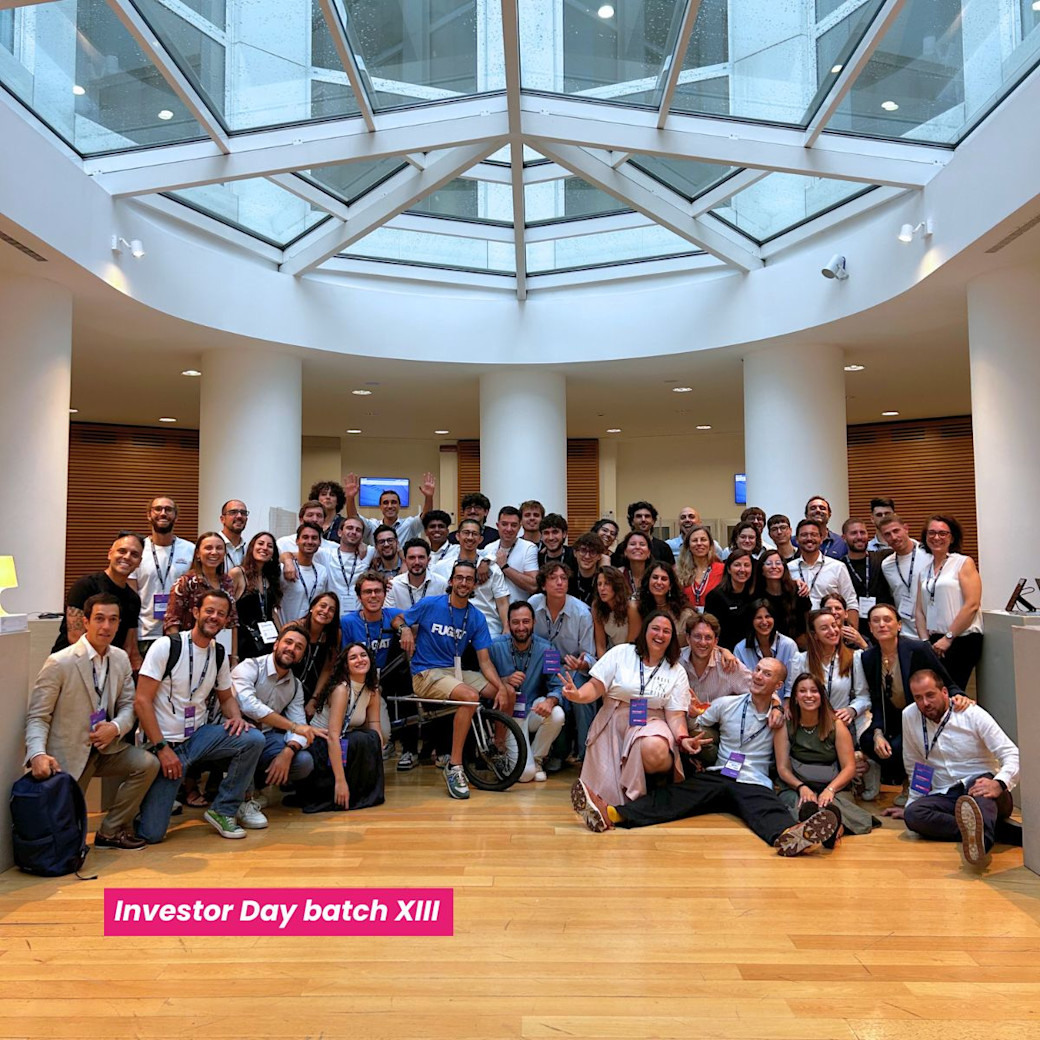 Investor Day batch XIII
When B4i was launched in 2019, the ambition was never simply to create another university accelerator. The challenge was broader: to help position entrepreneurship as a credible career path and make Bocconi a place where ambitious and smart founders could find the resources, relationships and support needed to build a company.
That ambition was deliberately inclusive. While rooted within Bocconi, B4i was designed from day one as an open platform, welcoming entrepreneurs regardless of their academic background or institutional affiliation. The objective was to attract talented founders from across Italy and abroad, connecting them with the expertise, networks and credibility that Bocconi could provide.
Looking back, this decision reveals one of the defining characteristics of the B4i approach. The organization did not start by asking how to build a successful accelerator. It started by asking how to build an environment in which exceptional founders would choose to build. That subtle difference shaped many of the decisions that followed — from the way programs were designed, to the emphasis placed on community, mentorship and long-term relationships rather than transactional support.
There was never a formal playbook behind B4i. No proprietary framework, no predefined formula for building successful startups. Instead, the method emerged over time through thousands of conversations with founders, years of experimentation and a constant focus on a single objective: creating as much value as possible for the entrepreneurs the team worked with. Looking back, that experience can be distilled into 3 principles that defined the way B4i operated.
From the very beginning, the team aligned around a simple idea: every decision and action should be evaluated according to the value it created for entrepreneurs. The potential limitation of the relatively limited resources available, became the backbone of a responsible, dedicated and hard working approach. B4i focused on helping founders become better decision-makers, stronger leaders and more resilient entrepreneurs.
Putting founders first may sound like a cliché. In practice, however, it means finding the right balance between quality and quantity. B4i supported more than 800 founders across 13 batches of its Pre-Acceleration and Acceleration programmes. This was made possible by the team's dedication, which ensured that founders always had a reliable and accessible point of reference throughout their entrepreneurial journey.
The goal was never simply to support as many companies as possible, but to dedicate the time and attention needed to help each team navigate the challenges of building a business. It required resisting the temptation to optimize for scale and recognizing that the greatest long-term impact often comes from spending more time with fewer people. This philosophy became the foundation on which the rest of the B4i method was built, and in any case working with more than 150 founders per year.
B4i believed that entrepreneurship is rarely a solo journey. Beyond mentorship, workshops and funding, one of its greatest strengths was its ability to create a genuine sense of belonging among founders, mentors and operators.
"Over 13 batches, what's stayed with me most is watching former founders and founders who are still building — people from different batches who never crossed paths during their own program — recognize each other during events or conferences outside of Italy simply because they've been through B4i" says Oleksandr Komarevych, Portfolio Manager at B4i. “It's a sign of shared values, of a give-back culture. You stop seeing your startup as a small boat alone at sea, and start seeing it as part of something bigger: a ship where you can always ask for a hand when things get hard, and share the good moments too. As mentors, as speakers, as friends showing up to someone else's demo day — the gatherings and informal moments outside the structured program are where this really gets built."
No accelerator team, regardless of its expertise, can provide every answer. By cultivating a community that continued to learn from itself, B4i created a support network capable of growing well beyond the organisation's own boundaries.
Supporting founders starts with empowering the people who support them. At B4i, every team member was encouraged to take ownership of their work, with clear responsibilities and the autonomy to make decisions. Rather than operating through rigid hierarchies, the organization fostered a culture of accountability, where the quality of each person's contribution directly shaped the experience of the founders.
This internal culture proved to be one of B4i's greatest strengths. As the team grew, shared objectives and individual ownership ensured that everyone worked towards the same mission while bringing their own expertise and perspective. For founders, this translated into a better experience. They were not interacting with a program, but with people who genuinely felt responsible for helping them succeed. As in many fields, the quality of an accelerator is often a reflection of the quality of the team behind it.
 The B4i method
B4i translated its approach into a wide range of programs and initiatives, each designed to support entrepreneurs at different stages of their journey while strengthening the broader innovation ecosystem.
At the core were the Acceleration and Pre-Acceleration programs, providing early-stage teams with structured support, mentorship and access to investments and investors. Alongside these flagship programs, initiatives such as Future Founders Program, led by Augusto Coppola, or SPIN:rise with the EIT, encouraged aspiring entrepreneurs to develop an entrepreneurial mindset even before launching a startup.
Supporting entrepreneurship also meant engaging the wider university community. Through initiatives such as the University Startup Challenge (USC) and collaborations with student associations, B4i brought entrepreneurship directly into classrooms and campus life, organizing events, sharing practical content and creating opportunities for students to explore innovation firsthand. Over the years, this contributed to making entrepreneurship a visible and accessible part of the university experience.
The connection with Bocconi University and SDA Bocconi also translated into tangible opportunities for both students and startups. The Legal Clinics provided founders with access to specialized expertise, while collaborations with academic programmes enabled students to work directly with startups on market research, branding and go-to-market projects. Internship initiatives further strengthened this exchange, connecting talented students with early-stage companies and creating value on both sides.
Beyond these examples, B4i produced educational content, practical resources and events designed to make entrepreneurial knowledge more accessible — from fundraising and product development to problem identification and founder best practices.
While each initiative addressed a different need, they all shared the same objective: never simply to accelerate companies, but to equip founders with the skills, relationships and confidence needed to navigate the complexity of building a business.
For Daniele Calvo Pollino, CEO and Co-Founder of Mapo Tapo - Acceleration Program Batch II - the sense of community is what ultimately defined the B4i experience.
“When I think about B4i, I do not immediately think about the workshops, the mentors or the investor introductions. We joined B4i almost by chance. We had just moved back to Italy after spending a couple of years abroad, where we had started building what would eventually become Mapo Tapo. We came from Amazon and McKinsey, so we knew how to work in structured environments. Building something from scratch was a completely different story.
B4i gave us a method: sprint planning, cadence, legal support and mentors. It gave us a rhythm at a stage when everything felt chaotic, helping us break down what looked like impossible goals into something we could actually execute.
But the moment that truly changed the way I think came when we finally moved into the offices after Covid. For the first time, we were not building alone. You would grab a coffee and end up discussing fundraising with one founder, pricing with another and hiring with someone else. Often, the person next to you had already gone through exactly the problem you were facing. Other times, you were the one who could help. The interesting part was not simply that people were willing to help. It was that, after a while, you genuinely wanted to help too.
I remember sharing fundraising templates we had built, presenting one of our biggest mistakes during a Fuckup Night, and speaking with younger founders about fundraising narratives or simply the reality of building a startup. None of this was expected. It just felt like the natural thing to do.
That’s what quietly entered my muscle memory. The best communities are not necessarily the ones that create the most value for you. They are the ones that make you genuinely want to create value for everyone else — where your first instinct becomes: “How can I make this place even better?”
B4i was one of those places. And honestly, I do not think I have experienced that feeling many times in my life.”
 A founder's perspective
The ecosystem B4i entered in 2019 is not the one it leaves behind today. Italy now offers founders more programs, more investors and more opportunities than ever before. But with that growth comes a new challenge: raising the level of ambition. We firmly believe TEF is well positioned to respond to this need.
The next phase will require more than simply expanding the number of initiatives supporting entrepreneurship. It will require greater access to capital, earlier investment in exceptional founders and a stronger ability to help startups scale internationally. At the same time, as the ecosystem grows, there is a risk of losing what made many of its first success stories effective: the willingness to spend time alongside founders, understand their challenges and provide support that can’t always be standardized.
Perhaps this is the real legacy of the B4i experience. Not a model to replicate exactly, but a reminder that ecosystems are built one founder at a time. As new organizations, investors and institutions — including TEF — take the baton, the opportunity is not simply to build more startups. It is to keep building better founders.